

OVERALL SCORE
48/75



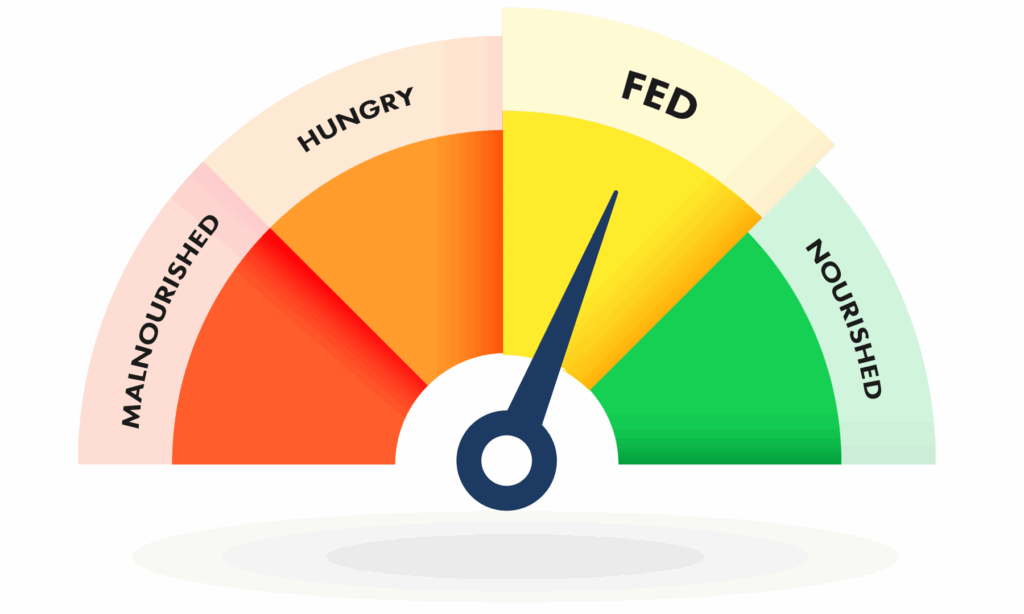
Below you'll find the questions and your answers grouped by section. If you scored 3 or lower, we've provided an action step. 4 and higher—no action needed. Keep up the great work!
Keep God at the center: Always highlight what the passage reveals about God’s character and nature before moving to human response. (See Chapter 7 of Feeding Faith.)
Engage actively: Add interactive moments to your lesson (movement, response, or simple games) so kids stay engaged and retain more—and look for creative ways to involve kids directly in the storytelling. (See Chapter 9 of Feeding Faith.)
Work with your leaders to create the rules of the room and establish a clear set of consequences. Communicate that regularly to the kids. (See Chapter 11 of Feeding Faith.)
Evaluate your last few lessons and adjust the next one in the direction you’re deficient—either clearer teaching or deeper response. Consider a curriculum with better balance. (See Chapter 12 of Feeding Faith.)
Encourage leaders to share one real-life example each week of how they’re living out the Big Idea so kids can imitate what they see. (See Chapter 12 of Feeding Faith.)
Invite your leaders to identify one struggling child or family and take a simple step of relational support this month. Encourage them to share these stories with one another to normalize compassion within your team. (See Chapter 13 of Feeding Faith.)
At regular intervals, give kids clear, age-appropriate opportunities to begin a relationship with Jesus—and pray with those who are ready to take that step. (See Chapter 16 of Feeding Faith.)
Build in a Response Time—moments of prayer, journaling, artistic expression, or Bible reading—so kids have space to respond personally to what God is doing in their hearts. (See Chapter 17 of Feeding Faith.)
Choose one identity truth (loved, forgiven, child of God, never alone, etc.) and speak it aloud over the group every week—use the same phrase for a full month. (See Chapter 18 of Feeding Faith.)